Water heaters are among the most relied upon appliances in a household. They work behind the scenes to deliver warm showers, clean dishes, and comfortable washing cycles. When a unit starts to fail it can disrupt daily routines and lead to costly damage if left unaddressed. This article walks through the most common water heater problems and offers clear, practical steps you can take to diagnose issues and reduce risk.
Whether you have a traditional tank model or a tankless setup the same principles apply. Recognizing symptoms early gives you more options for repair and can extend the life of the equipment. Below you will find straightforward explanations of typical faults, examples of likely causes, and safe tips you can try at home as well as guidance on when you should contact a professional.
How Water Heaters Work Briefly
Understanding the basic operation of your heater makes troubleshooting easier. Traditional tank models store a fixed volume of heated water and keep it at a set temperature using a thermostat and a heating element or gas burner. Tankless units heat water on demand as it flows through a heat exchanger. Both types use valves to control pressure and temperature and both can suffer from sediment buildup mineral deposits and wear over time.
No Hot Water or Not Enough Hot Water
One of the most common complaints is no hot water or low flow of hot water. The cause depends on the type of system you own and several simple checks often pinpoint the issue.
- For electric tank heaters a burned out heating element or a tripped circuit breaker is a frequent cause. Check the breaker panel first then test heating elements if you are comfortable with basic electrical checks.
- For gas tanks a failed pilot light or burner can be the culprit. Look for a pilot outage or soot buildup that indicates inefficient combustion.
- For tankless systems scale buildup on the heat exchanger or a clogged inlet filter can reduce output. Flow sensors and ignition assemblies can also fail over time.
Tip example. If you have low volume of hot water try lowering the thermostat a few degrees then test recovery. For tanks that are older than 10 years low capacity often signals that replacement should be considered rather than repeated part swaps.
Strange Noises Coming From the Tank
Noises such as popping banging or hissing are a strong sign that something is happening inside the tank. These sounds are usually related to sediment buildup or trapped steam and pressure issues.
Popping and Rumbling
Popping or rumbling typically occurs when hard water minerals settle at the bottom of the tank. As the burner heats water beneath the sediment the trapped water turns to steam and makes popping noises. Over time this layer can reduce heating efficiency and shorten the life of the tank.
Hissing and Sizzling
Hissing often indicates leaking water hitting a hot surface or a failing sacrificial anode rod exposing metal to water. Sizzling along with moisture around the base of the unit can mean a slow leak that needs prompt attention.
Leaks and Corrosion Risks
Leaks are among the most urgent water heater problems because they threaten flooring and structural components. A slow drip may appear at pipe fittings while a more serious leak can come from the tank itself where corrosion has compromised the metal.
Common Leak Sources
- Loose plumbing connections at cold and hot water inlets
- Faulty temperature and pressure relief valve that releases water
- Drain valve that does not fully close after tank flushing
- Pinholes in the tank from internal corrosion
Example action. If you spot moisture around the base shut off electricity or gas to the unit and close the cold water supply. That limits further water damage. If the leak is coming from the tank body itself replacement is usually the only long term solution because internal corrosion is not repairable for most models.
Poor Water Quality and Discolored Water
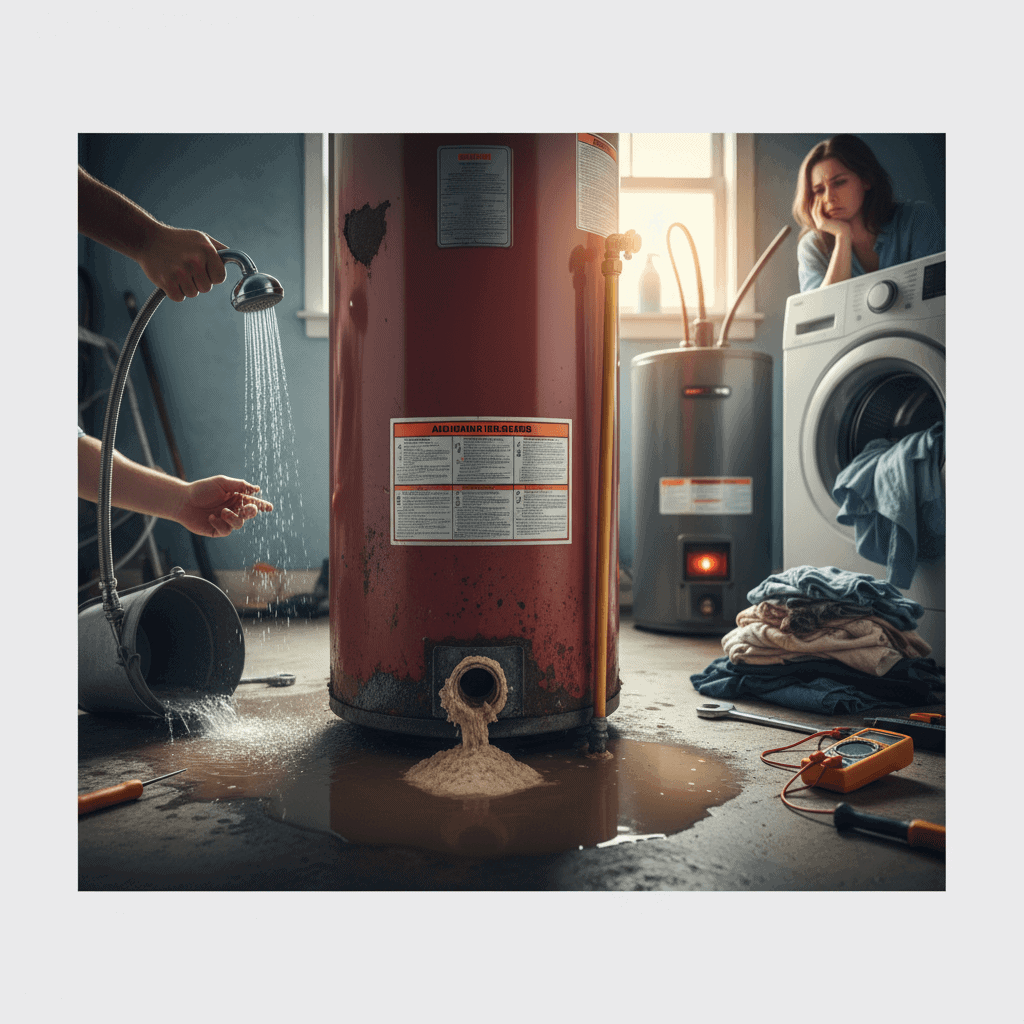
Rusty brown water or particles in your hot water indicate corrosion or deteriorating anode rods. White cloudy water is often caused by dissolved air and is harmless while green or blue tint can point to copper plumbing wear.
- Rusty water usually means the inner tank lining is breaking down or the anode rod has depleted. Replacing the anode rod can help when the tank is still in good condition.
- Sand like particles are sediment that builds up over time. Flushing the tank annually can reduce this and restore heating efficiency.
Tip. Inspect the anode rod every two to three years in areas with hard water. A heavily corroded rod will appear eaten away on inspection and should be replaced to protect the tank lining.
High Energy Bills and Reduced Efficiency
An older or neglected water heater will consume more energy to produce the same amount of hot water. Sediment buildup limits heat transfer and forces heaters to run longer while faulty thermostats can hold the tank temperature higher than required.
- Lowering the thermostat to 120 degrees Fahrenheit is a common recommendation for safety and energy savings unless household needs require hotter water.
- Annual tank flushing and replacing a worn anode rod improves heat transfer and can reduce fuel or electricity use by noticeable margins.
- When a unit is more than 10 years old replacement models with higher efficiency ratings could lower operating costs and reduce repair frequency.
Maintenance Tasks Homeowners Can Do Safely
Regular maintenance keeps small problems from becoming emergencies. Many tasks are straightforward and require only basic tools. Always follow safety steps and consult the owner manual for model specific instructions.
- Flush the tank yearly to remove sediment and improve recovery time
- Test the temperature and pressure relief valve by lifting the lever and letting it snap back to check for flow
- Inspect flexible connectors and visible plumbing for signs of corrosion
- Check the pilot assembly on gas units and replace the battery or clean the igniter on some electronic models
Safety note. When working near gas or electric components shut power at the breaker for electrical units and close the gas supply for gas units before beginning any work. If you feel unsure about any step stop and seek professional help.
When to Call a Professional
Some repairs are reasonable for a confident homeowner while others require training and tools that are not common. If you see persistent leaks notice flames that look irregular on a gas burner get frequent pilot outages find discolored water after flushing or observe major corrosion it is time to call a licensed service technician. For complex diagnostics and secure repairs consider experienced contractors who offer prompt diagnostic visits and clear pricing.
For residents who prefer a direct route to trusted help contact local water heater repair services to schedule an evaluation. A technician can test combustion efficiency check electrical elements measure pressure and recommend repair or replacement options based on measured data. This is especially important when a unit shows multiple signs of failure or when safety related parts such as the pressure relief valve appear compromised.
Choosing the Right Replacement Option
If repairs are frequent or the unit is beyond its service life a replacement can be the wiser choice. Comparing models involves looking at first hour rating for tank units and flow rate for tankless units as well as fuel type and available space.
- For households with high simultaneous demand a larger tank or a high flow tankless unit will keep temperatures steady
- Tankless models have longer lifespans and lower standby losses while tanks have simpler installation and lower upfront cost for many homes
- Factor in local fuel prices and available incentives when choosing a new system
Example. A family that runs multiple showers and a dishwasher at the same time may benefit from a high capacity tank or a dual tankless setup to prevent temperature drops during peak use.
Conclusion summary and next steps
Your water heater is a vital part of home comfort and safety. Recognizing the common water heater problems covered here helps you decide when a simple home check or a timely repair will be enough and when professional intervention is wise. Regular tank flushing checking the anode rod and watching for unusual noises or leaks can prevent many failures. If you are dealing with a leak major corrosion erratic heating or signs that a unit is near the end of its life contact a qualified technician right away to limit damage and protect your household.
If you want direct professional support schedule an inspection with a reputable plumbing company that offers clear estimates and documented work. Quick response often reduces repair cost and prevents secondary damage to floors and walls. Take action now to protect your system and your home.